When I compare PCGI vs. Stainless Steel vs. HPL Cleanroom Panel Surface Coatings, I focus on five practical factors: cleanability, chemical resistance, durability, regulatory suitability, and total installed cost. PCGI is generally the economical general-purpose option, stainless steel is preferred for aggressive chemical cleaning and demanding hygiene zones, while HPL provides strong resistance to scratching, impact, and many chemicals. The correct choice also depends on the panel core, thickness, joints, sealants, and whether the system is installed on walls, ceilings, or both.
!
The main difference is the exposed facing material rather than the entire panel assembly. A cleanroom panel normally includes an outer facing, a core material, edge details, joint profiles, and sealants. The surface determines how the panel responds to cleaning chemicals, abrasion, moisture, impact, and contamination, while the core and joint system influence thermal performance, fire behavior, rigidity, and air leakage.
PCGI cleanroom panels use galvanized steel with a factory-applied paint or powder coating. Stainless steel panels use corrosion-resistant steel, commonly 304 or 316 grade, as the exposed surface. HPL cleanroom panels use high-pressure laminate bonded to a substrate or sandwich panel, creating a non-metallic surface with different scratch, impact, and chemical-resistance characteristics.
| Surface material | Best use | Main strengths | Main limitations | Maintenance profile | Relative cost |
|---|---|---|---|---|---|
| PCGI | General pharmaceutical, laboratory, food, and support areas | Low initial cost, smooth finish, easy fabrication, broad color selection | Coating damage can expose steel and create corrosion risk | Routine neutral or approved disinfectant cleaning | Low |
| 304 stainless steel | Healthcare, food, laboratories, and controlled hygiene areas | High cleanability, strong durability, good corrosion resistance | Higher material and fabrication cost; visible scratches may remain | Frequent cleaning is acceptable when chemicals are controlled | Medium to high |
| 316 stainless steel | Aggressive chemical, high-humidity, saline, or demanding pharmaceutical areas | Improved resistance to chlorides and several corrosive environments | Highest material cost among the three; still requires chemical compatibility checks | Suitable for intensive sanitation when grade and finish are specified correctly | High |
| HPL | Medical devices, laboratories, electronics, offices, and areas requiring impact resistance | Strong scratch and impact resistance, decorative flexibility, easy replacement of some components | Joints and exposed edges require careful sealing; unsuitable grades can absorb moisture | Clean with approved products and avoid prolonged moisture at joints | Medium |
The table provides a starting point, but it should not replace a coating and panel specification. A PCGI panel with a properly selected finish and sealed edge may perform better than an incorrectly specified stainless steel or HPL system.
I evaluate the surface together with the complete panel construction. A 50 mm panel and a 100 mm panel can have different rigidity, insulation, service-routing capacity, and fire-performance characteristics even when both use the same facing. The core may be mineral wool, rock wool, PIR, EPS, honeycomb, or another engineered material, and each option affects panel weight, thermal behavior, acoustic performance, and fire classification.
Panel joints are equally important. Tongue-and-groove profiles, cam-lock connections, aluminum or steel joint inserts, and silicone or hybrid sealants influence particle retention and cleanability. Poorly aligned joints can create ledges where residue accumulates, while sealant shrinkage or cracking can allow moisture and microorganisms to enter behind the facing.
For walls, I normally prioritize impact resistance, repairability, service penetrations, and resistance to trolley or equipment contact. For ceilings, I pay greater attention to panel span, deflection, suspension details, access openings, pressure differentials, and the risk of particles falling from damaged coatings or failed sealants.
PCGI means pre-coated galvanized iron or pre-painted galvanized steel, depending on the supplier’s terminology. The galvanized steel substrate provides zinc protection, while the exposed coating supplies color, cleanability, and additional resistance to abrasion and chemicals. The coating may be powder-based, coil-coated, PVDF-based, or film-laminated, so “PCGI” alone does not identify the complete surface specification.
A typical PCGI specification should state the steel thickness, zinc coating mass, paint or powder chemistry, dry-film thickness, gloss level, color, adhesion result, and resistance to the disinfectants used at the facility. For example, a buyer may request a coating thickness range such as 60–120 micrometers, but the final value must be confirmed by the manufacturer’s technical data and inspection report. The specification should also define how cut edges, penetrations, corners, and field modifications are protected.
PCGI is often suitable for general pharmaceutical rooms, laboratories, electronics support areas, food-processing spaces, corridors, gowning rooms, and technical rooms. It offers a lower initial cost than stainless steel and can be fabricated in large panel formats with consistent appearance. However, the coating remains the protective barrier, so scratches, impact damage, chalking, yellowing, or delamination can expose the galvanized substrate.
The most common PCGI problems occur at damaged corners, drilled openings, cut edges, and door-frame interfaces. If the zinc layer or paint film is removed, repeated exposure to water and disinfectants can produce red rust or localized corrosion. Strong oxidizers, concentrated acids, alkaline cleaners, and solvents may also change gloss or color if the coating chemistry was not selected for those products.
I recommend inspecting PCGI panels for coating adhesion, color stability, surface hardness, and chemical compatibility before approving a large installation. The coating should not be judged only by appearance at delivery. A test panel exposed to the facility’s actual cleaning agents can reveal changes that a general product brochure may not show.
Stainless steel cleanroom panels provide a metal surface without relying on a paint film as the primary protective layer. 304 stainless steel is widely used in ordinary controlled environments, while 316 stainless steel contains molybdenum and is commonly selected for higher chloride exposure, saline environments, aggressive cleaning, and certain pharmaceutical or food applications.
The finish is as important as the grade. A smooth 2B finish may be suitable for many wall systems, while brushed or polished finishes can change reflectivity, scratch visibility, and cleaning behavior. Surface roughness should be specified where required by the project, because a smooth surface with fewer grooves and inclusions is easier to wipe and less likely to retain residue.
Stainless steel is a strong option for aseptic processing rooms, washdown areas, high-humidity zones, hospitals, food-processing rooms, and facilities using frequent disinfection. It also tolerates localized repairs better than a coated surface because small scratches do not automatically expose a carbon-steel substrate. Nevertheless, stainless steel can stain, pit, or discolor when exposed to chlorides, bleach residues, iron contamination, or incompatible chemicals.
I do not consider stainless steel universally better than powder-coated galvanized steel. Stainless steel is usually the safer choice when the cleaning regime includes aggressive chemicals, high moisture, repeated washdown, or strict hygiene requirements. PCGI can be the more rational choice when the facility uses controlled disinfectants, has moderate traffic, and needs to manage initial construction cost.
The comparison should include the full lifecycle rather than only the purchase price. Stainless steel typically carries a higher upfront material and fabrication cost, but it may reduce recoating, patching, or replacement work in demanding areas. PCGI may provide a lower installed cost, yet damaged coatings at corners and penetrations can create maintenance expenses if repairs are frequent.
HPL, or high-pressure laminate, is produced by consolidating resin-treated decorative and kraft paper under heat and pressure. In cleanroom construction, HPL may be bonded to a substrate or integrated into a sandwich panel system. The surface can provide a hard, decorative, and impact-resistant finish, but the performance depends strongly on the laminate grade, adhesive, backing material, edge treatment, and joint design.
HPL cleanroom panels are commonly considered for medical-device manufacturing, laboratories, electronics areas, healthcare spaces, offices connected to cleanrooms, and rooms where frequent trolley contact may cause dents or scratches. HPL can offer more design flexibility than exposed metal, including multiple colors and patterns. It may also conceal minor handling marks better than polished stainless steel.
The main risk is moisture entry at joints, penetrations, and exposed edges. If the laminate is cut without proper edge sealing, repeated cleaning can affect the adhesive or substrate. I therefore require moisture-resistant construction, sealed edges, compatible sealants, and documented chemical-resistance testing before using HPL in wet or heavily sanitized zones.
HPL can be more resistant to visible scratching and impact in some applications, while stainless steel generally provides better tolerance for prolonged moisture and intensive washdown when the correct grade and finish are used. Stainless steel is also easier to inspect for surface damage because the facing is homogeneous. HPL may offer a warmer appearance and easier local replacement, but its performance depends on the integrity of the laminate bond and edge details.
For a dry laboratory or medical-device room, HPL may provide a balanced combination of cleanability, impact resistance, and appearance. For an aseptic processing area with frequent chemical sanitation, I would normally evaluate 316 stainless steel first, then compare it with a tested HPL grade rather than assuming equivalent performance.
In my experience, the easiest surfaces to clean are smooth, non-porous, continuous finishes with few joints and minimal texture. Stainless steel usually performs well because there is no separate paint film to delaminate, although brushed finishes can retain residue along the grain if they are wiped incorrectly. Smooth PCGI can also be easy to clean when the coating has good adhesion and is not damaged.
HPL can be easy to wipe when the laminate is smooth and the edges are fully sealed. The cleaning result depends less on the material name and more on surface roughness, panel alignment, joint width, sealant condition, and the disinfectant procedure. A rough stainless steel finish or poorly sealed HPL joint may be harder to sanitize than a smooth, well-installed PCGI system.
Chemical resistance must be evaluated against the exact products used in the facility. Alcohols, hydrogen peroxide, peracetic acid, quaternary ammonium compounds, chlorine-based disinfectants, acids, and alkaline cleaners can affect surfaces differently. I recommend requesting immersion, wipe, or repeated-cycle testing using the actual concentration, contact time, temperature, and number of cleaning cycles expected during the panel’s service period.
Vaporized hydrogen peroxide, or VHP, requires special attention to coating chemistry, sealants, gaskets, door interfaces, and penetrations. A supplier should provide compatibility information for the specific PCGI coating, HPL grade, stainless-steel finish, and joint sealant rather than making a general statement about the material category. VHP exposure can also affect elastomers, adhesives, and painted accessories, which means the panel facing alone cannot determine suitability.
For aggressive chemical cleaning, 316 stainless steel is often the first material I assess. For controlled disinfection, a tested PCGI coating or HPL surface may be adequate, provided the coating, edge sealing, and maintenance procedures are documented.
For pharmaceutical manufacturing, I generally select the surface by room function rather than applying one material everywhere. PCGI may suit corridors, change rooms, warehouses, and lower-risk support areas, while stainless steel or tested HPL may be more appropriate for formulation, filling, washdown, or aseptic rooms. GMP expectations also make joint geometry, cleanable coving, flush windows, doors, and service penetrations critical.
For hospitals and healthcare facilities, smooth PCGI, HPL, or stainless steel can all be appropriate depending on cleaning chemicals, traffic, moisture, and impact exposure. HPL may be useful in patient-support or medical-device rooms where impact and appearance are important. Stainless steel is usually favored around sinks, wash stations, wet rooms, and areas exposed to repeated disinfection.
For electronics and semiconductor facilities, I consider particle generation, static-control requirements, surface damage, and compatibility with process chemicals. The selected panel may need an ESD-controlled finish, conductive grounding path, or a low-particle joint design. Surface selection should therefore be coordinated with the facility’s electrical and contamination-control strategy.
For food-processing facilities, stainless steel is frequently preferred in wet, washdown, and high-hygiene zones. PCGI may be suitable in dry processing, storage, corridors, or areas with limited chemical exposure. HPL can be considered in dry support spaces, but exposed edges and moisture-prone joints require careful evaluation.
PCGI and PPGI are often used interchangeably in commercial discussions, but buyers should verify the substrate and coating specification. PCGI generally refers to galvanized steel that has already received a coating, while PPGI commonly means pre-painted galvanized iron or steel. The practical distinction depends on the supplier’s terminology, coating system, steel grade, zinc protection, and manufacturing process.
PVDF is a coating chemistry rather than a separate base metal. It may be applied to galvanized steel or other metal substrates to improve weathering and color retention, but exterior performance does not automatically prove suitability for cleanroom disinfectants. Film-laminated surfaces use a polymer film bonded to metal, and their performance depends on adhesive integrity, film chemistry, edge protection, and resistance to the cleaning cycle.
I always request a complete layer description: substrate, metallic protection, primer, topcoat or film, dry-film thickness, gloss, color, adhesive, and test method. This prevents a purchase decision based only on labels such as “powder-coated,” “PVDF,” or “anti-bacterial.”
| If the priority is... | Recommended starting point | Why |
|---|---|---|
| Lowest initial cost for general rooms | PCGI | Lower material cost and broad fabrication options |
| Frequent chemical disinfection | 316 stainless steel or tested specialty coating | Better tolerance when chemical compatibility is confirmed |
| High humidity and washdown | 304 or 316 stainless steel | Reduced dependence on a paint film |
| High impact and scratch exposure | HPL or stainless steel | HPL can resist visible damage; stainless steel supports long service |
| Aseptic pharmaceutical processing | 316 stainless steel or validated coated system | Supports intensive sanitation and strict joint control |
| Dry laboratories and electronics support | PCGI or HPL | Balances cleanability, cost, and design flexibility |
| Semiconductor ESD zones | ESD-compatible panel system | Requires surface resistance and grounding verification |
| Easy local replacement | Modular PCGI or HPL system | Damaged panels or sections may be replaced without full-room reconstruction |
Before approving Clean Room Wall Panels, I ask the supplier to provide the following information:
Easywall presents cleanroom wall panels, ceilings, doors, windows, and related systems for pharmaceutical, laboratory, healthcare, electronics, and other controlled environments. When I review a supplier such as Easywall, I would compare its proposed panel construction against the checklist above rather than selecting a surface based only on a product name.
PCGI vs. Stainless Steel vs. HPL Cleanroom Panel Surface Coatings should be decided by room risk, cleaning chemistry, moisture exposure, impact level, and lifecycle cost. PCGI is usually the practical option for general-purpose rooms and controlled cleaning programs. Stainless steel, especially 316 grade, is the stronger starting point for aggressive chemicals, wet processing, high humidity, washdown, and demanding hygiene zones. HPL is attractive for dry laboratories, healthcare spaces, and medical-device areas requiring scratch and impact resistance.
I recommend dividing the facility into application zones instead of specifying one surface for every room. Obtain coating thickness, stainless-steel grade, HPL construction, joint details, chemical-compatibility results, fire data, and warranty terms before purchase. This approach gives the design team a measurable basis for choosing cleanroom panels that support sanitation, durability, compliance, and long-term maintenance control.
最新消息
How to Choose the Right Cleanroom Panel Core Material?
 Sep. 29, 2026
PCGI vs. Stainless Steel vs. HPL Cleanroom Panel Surface Coatings
Sep. 28, 2026 
How cleanroom Panel Thickness Affects Cleanroom Performance?
Sep. 25, 2026 
How Cleanroom Panels Support Contamination Control?
Sep. 23, 2026 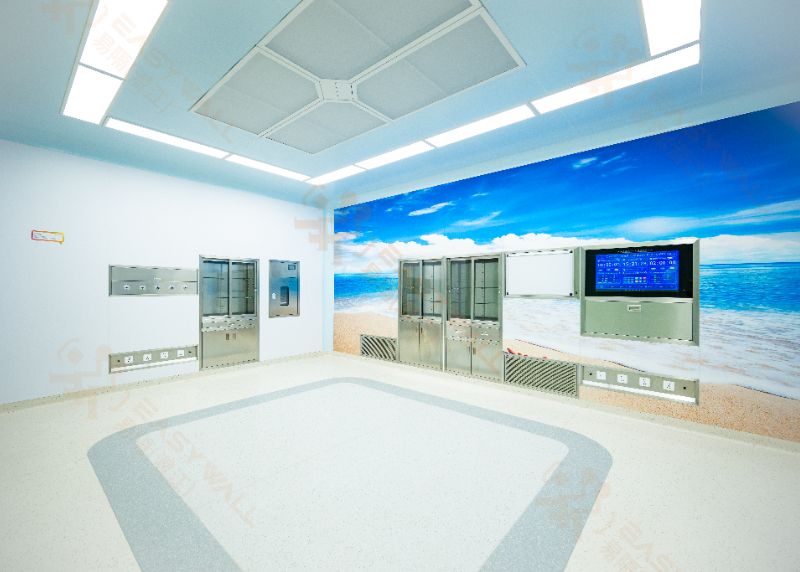
VHP Sterilization: Panel Coating Resistance
Sep. 21, 2026 我们会在 24 小时内回复您,或者每天上午 09:00 - 中午 12:00 致电我们
+86 139 6255 5162
请求报价
技术创新、产品质量是企业的灵魂、市场需求、客户满意是企业的生命
 English
  French
  Russian
  Portuguese
  Japanese